what color do you mix to make red
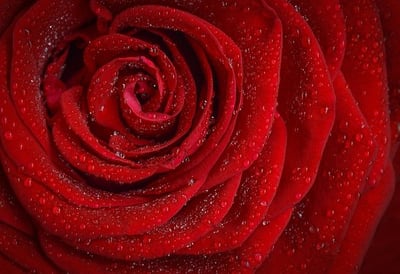
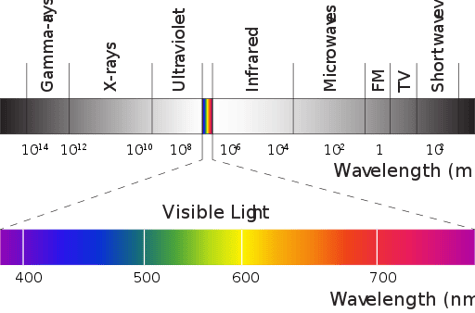
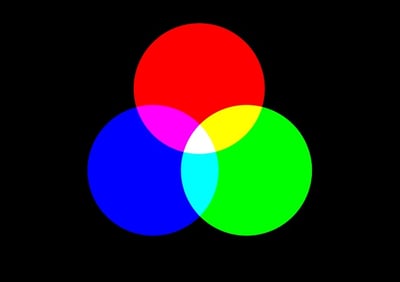
You probably learned in school that red is a primary color, significant that it can be combined with other primary colors to brand new colors like orange and majestic. (If you're new to primary colors, this Sesame Street song explains information technology well...and information technology'southward catchy!) But if red is a main color...what colors make cherry? Is information technology even possible to brand red from other colors? In guild to sympathize how to brand cerise colour, nosotros need to understand a whole lot about both physics and culture. This article will teach you everything you demand to know most what colors make blood-red, like: There's a lot to embrace, so let's get started! If yous mix yellow and magenta, you lot'll end up with ruby. The hues of each color touch what shade of crimson you'll stop up with. If y'all add more magenta, yous'll get a libation cerise (like scarlet)...whereas more yellow will give you a warmer scarlet (like love apple)! But getting the right shade is catchy, and it involves agreement more about how to make crimson from a scientific perspective. We'll walk y'all through everything you need to know below. If you desire to pigment a red rose...how would you go most making the color red? Let'southward meet what science can teach united states of america about creating red! In society to sympathise what colors brand red, you first need to know what light is. (Trust united states of america: this volition make sense in a minute). Hither'due south how Crayola, the masters of color, explicate the relationship between color and light: When low-cal shines on an object some colors bounce off the object and others are absorbed by it. Our eyes but see the colors that are bounced off or reflected. The lord's day's rays contain all the colors of the rainbow mixed together. This mixture is known as white light. When white lite strikes a white crayon or marker barrel, it appears white to us because it absorbs no color and reflects all color as. A black crayon or marking cap absorbs all colors as and reflects none, so information technology looks black to us. While artists consider black a color, scientists exercise not because black is the absenteeism of all color. Basically, an object's concrete makeup causes light (also known as electromagnetic waves) to either be absorbed or reflected. Our eyes are able to see the light that'south reflected off the object...and nosotros perceive that light as color. Objects reflect light in different ways, which is why we have so many colors! Sometimes every wavelength of light bounces off of an object, which makes it announced white. Sometimes an object absorbs all wavelengths, making it appear black. But usually, an object reflects some wavelengths while arresting others, which is what gives us colour. So for instance, maybe your favorite shirt is green. That'due south considering your shirt reflects the light-green wavelength of light! And then what is a wavelength of lite, exactly? Call up about lite every bit if information technology were water at the beach. Sometimes the waves come in high and close together. At other times, the waves come in low and far autonomously. If you lot were to measure the length of those waves, you'd first at the crest (highest signal) of one wave and measure to the crest of the next. That would give you lot the wavelength of the water on the beach. Lite works very similarly, except the waves are much smaller and closer together. When it comes to low-cal waves, your optics measure wavelengths as they bounce off of objects...and then your brain translates those into color. That'south why anybody perceives color a niggling differently! Of course, at that place are tons of colors out there. The whole range of possible colour wavelengths is called the "spectrum." Here'southward what the spectrum looks similar: (MNDNF/Wikimedia) Each wavelength of calorie-free is measured in nanometers (nm). The longer the wavelength, the "warmer" the color appears. (Don't worry: nosotros'll talk about "warm" and "cool" colors later.) But notice that nosotros tin only see a tiny portion of the entire spectrum of light--but those wavelengths between most 400 and 800 nanometers. The range that we can come across unaided by technology is chosen the "visible spectrum." Keep in listen that there are wavelengths of low-cal that are longer than 800 nanometers and shorter than 400 nanometers...but humans aren't able to run across them! Animals, however, can: bees, snakes, and birds tin can all run into colors outside of our visible calorie-free range. But back to our visible light spectrum. Bank check out the diagram above ane more than time. You'll discover that cerise falls at the 700 nanometers in wavelength, and is ane of the longer wavelengths than we can see. The distance from crest to crest is simply a footling thicker than a soap bubble membrane. So, then, what colors make cherry-red? If an object is red, that ways information technology absorbs all wavelengths of light except those that fall around 700 nanometers in length. And then fire trucks, Red Succulent apples, and even Dorothy's blood-red slippers all reflect the red wavelength! One mode to make red is by mixing magenta and yellow together. Interestingly plenty, when y'all mix together some objects that reverberate calorie-free differently, their ability to reflect light gets mixed together as well. This happens in ii dissimilar ways: additive mixing and subtractive mixing. Additive mixing happens when wavelengths of light combine with one another. This is how your tv set works! We already know that the red wavelength of calorie-free is 700 nm or so. Just if two or more than other wavelengths combine to equal 700 nm, they can appear red, likewise. So if an ultraviolet light moving ridge measuring nigh 250 nm combines with a imperial lite wave (that'due south 450 nm), your eye will perceive it equally red! Subtractive mixing happens when wavelengths are removed from the visible light spectrum through the apply of concrete mediums, such equally paints or dyes. This process is called subtractive color considering the colored pigments create layers that absorb some wavelengths and reflect others. And then how practise you make crimson? And what two colors make red? If you mix magenta and yellow, you get red. That'south considering when you mix magenta and yellowish, the colors cancel out all other wavelengths of low-cal except red. Boom! At present you lot've got the color red. That'due south why your printer--which just has black, cyan, magenta, and yellow ink cartridges--tin print cherry...even though in that location isn't whatsoever crimson ink. Now that you understand the complex history behind the color red, you're probably wondering what colors you can make when you combine red with other colors. For example, what color does cerise and blue make when mixed together? Here are some of the most popular colors you can brand with red! Secondary colors are those created when y'all combine any two primary colors. There are only 3 of them, so at that place are only two secondary colors made with red: Tertiary colors are created when yous combine master and secondary colors together. The 3 tertiary colors made with cherry-red are: Quaternary and Quinary Colors are ones when you lot combine various hues of primary, secondary, and 3rd colors together. At that place are a nearly infinite number of them, depending upon the amount of each component added. These colors are too afflicted past ii concepts called tint and shade. Tints are colors fabricated by adding white to another color. So adding white to ruby-red creates a tint that we know as pinkish. Shades are made by calculation blackness to another color. Adding black to red gives you a deeper shade of scarlet, like mahogany. Hither are a few of the most pop fourth and quinary shades of ruddy: Carmine Red Blood Mahogany Rose Cherry is actually a pretty circuitous color. That'southward why there are enough of myths that make understanding how to make scarlet a complicated process. Nosotros're going to debunk two of the most common myths most the color scarlet below. We can hear you already. "But wait! I learned that red was a primary color in kindergarten and that you couldn't mix colors to make ruby-red. Has my whole life been a prevarication?!" Not exactly. Ruby-red is actually an additive primary colour. By combining ruby-red with another additive color--light-green or blue, specifically--y'all tin brand most of the colors on the visible low-cal spectrum. The idea that red, yellow, and blue are primary colors that can't exist created dates back to Aristotle, just it gained popularity in mainstream idea thanks to a 19th century German language philosopher named Goethe. Influenced past Newton's experiments with prisms--Goethe and other German philosophers wrote several books about the "psychological" effects of dissimilar colors of light. Basically, they decided that red, yellowish, and blue were the three principal colors we can see and all other colors are made from those three. But like we mentioned earlier, yous absolutely can brand red out of other colors through additive mixing, too! And then the idea that you tin't make ruby-red out of other colors isn't correct. Reddish is considered a "warm" color. Blue is "cool." The visible spectrum is said to progress from coldest (bluish hues) to hottest (red hues). That's because we make emotional associations with certain colors. Things that remind us of fire (cerise) or the dominicus (yellow) seem warm to us considering we're taught that they're hot. Things that are colored more like grass (green) or water or the sky (blue) seem cool to united states of america considering we acquaintance them with existence refreshing. But these emotional understandings of color are culturally based, which means they aren't always accurate...and they're not universal. Only when it comes to science, the truth is that "warm" and "absurd" wavelengths are reversed: wavelengths that are shorter (blue-ish) transmit more than energy and wavelengths that are longer (ruby-ish) transmit less. So, for example, stars that announced blue to us are those called-for hotter than those that appear cherry-red or orangish. Blueish flame burns hotter than orange flame, and so on. So scientifically speaking, red is actually cooler than blue. Below are 3 tips to assist you triangulate the exact hue of red you desire. We highly recommend using the colour matching company Pantone's online color tool equally a fashion of helping you visualize various hues of blood-red. In color, "hue" refers to the colored pigment without white or black added. This is the chemical element that creates the pure colour. If yous're wanting a brighter, more vivid shade of red, you'll desire to selection a shade with a brighter hue! The relative lightness or darkness of a color is called its "value." Typically colors with a lighter value (more white added) feel lighter and easier. If that's what you're aiming for, try a shade of red like rose or dial. Darker colors (more black added) feel more intimidating and threatening. Great dark, moody shades of red include wine, burgundy, and mahogany. The amount of colour included in a hue relative to the amount of white or blackness is called its "saturation". Colors that have very trivial white or black added are considered more intense, and they make you feel the emotion of the color more vividly. Pure ruby is an example of a super-saturated tone. When you desaturate blood-red, it tends to become more pinkish. Shades like strawberry and salmon are good examples of this! If you desire to have a career as an artist, going to art school tin help you lot starting time off strong. Hither'due south our list of the best art schools in the U.S. then you can start exploring your options! Oh, and we can help you smash your higher applications so you get into the fine art program of your dreams , too. But maybe yous're more interested in the physics of color. If and then, you should consider taking AP Physics 1, 2, or C during high school. You can learn more about each grade--and their differences!--in this article. 
What Colors Make Scarlet?: A Quick Overview
What Is Red? A Scientific Caption
And so How Do Yous Make Ruddy?
How to Make Reddish: Additive Mixing
How to Make Red: Subtractive Mixing
What Other Colors Can You Make With Cerise?
Secondary Colors
Purple

Orange

Tertiary Colors
Marigold

Tomato

Burgundy

Fourth and Quinary Colors
Scarlet

Raspberry





Myths About Red
Myth i: You lot Can't Make Red Because It'due south a Primary Color
Myth 2: Red Is the Warmest Color

three Tips for Getting the Hue of Reddish You Want
Tip 1: Pick Your Hue
Tip 2: Think Nearly Darkness and Light
Tip iii: Play With Saturation

What's Next?

Ashley Sufflé Robinson has a Ph.D. in 19th Century English Literature. As a content writer for PrepScholar, Ashley is passionate about giving college-jump students the in-depth data they need to get into the school of their dreams.
Source: https://blog.prepscholar.com/what-colors-make-red
Belum ada Komentar untuk "what color do you mix to make red"
Posting Komentar